Genetic risk prediction for eye disease

Glaucoma risk prediction for the clinic

Using genetics to predict glaucoma and AMD risk
Glaucoma and Age-related Macular Degeneration (AMD) are the two most common causes of irreversible vision loss. Our clinical services deliver genetic risk information to help health professionals and patients identify and manage glaucoma and AMD risk.
Using genetics to predict glaucoma and AMD risk
Glaucoma and Age-related Macular Degeneration (AMD) are the two most common causes of irreversible vision loss. Our clinical services deliver genetic risk information to help health professionals and patients identify and manage glaucoma and AMD risk.



Genetic risk scores
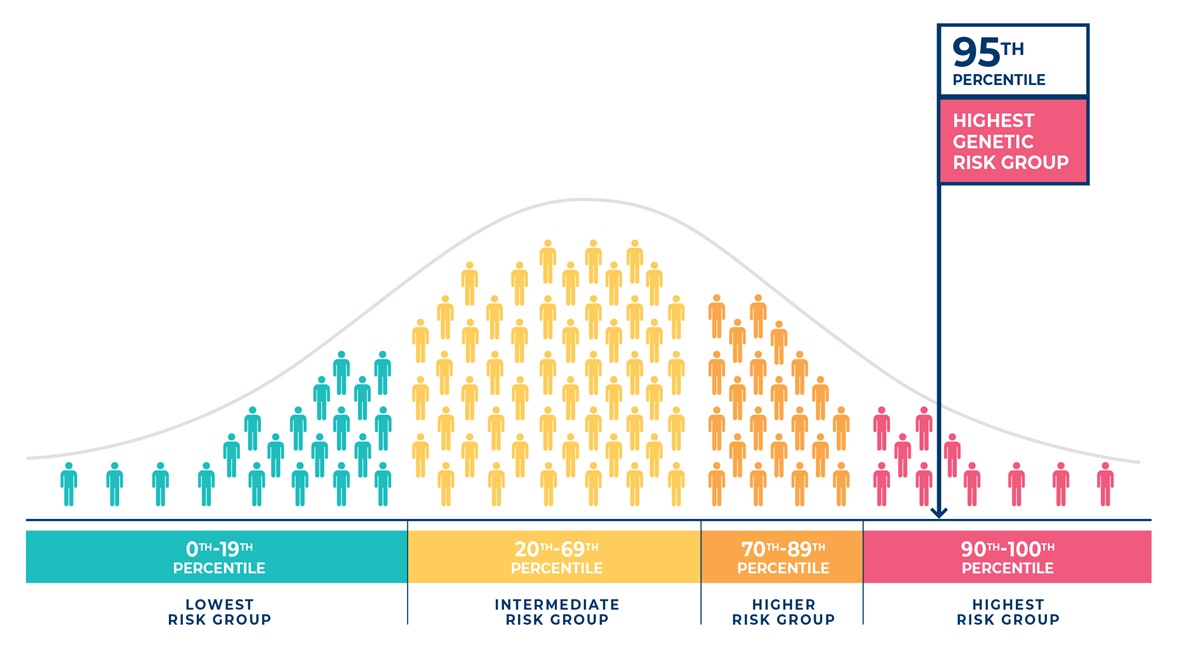
Genetic testing is widely used to assess the risk of diseases caused by changes in a single gene. However, many diseases – including glaucoma and AMD – are polygenic, that is they are influenced by a large number of genetic variants scattered throughout the genome. Genetic risk scores are a powerful new approach that combine the effects of many of these variants to predict an individual’s disease risk and how it compares to others in a population.
Genetic risk scores
Genetic testing is widely used to assess the risk of diseases caused by changes in a single gene. However, many diseases – including glaucoma and AMD – are polygenic, that is they are influenced by a large number of genetic variants scattered throughout the genome. Genetic risk scores are a powerful new approach that combine the effects of many of these variants to predict an individual’s disease risk and how it compares to others in a population.
Genetic risk scores for glaucoma and AMD
We have developed genetic risk score services for glaucoma and AMD, called SightScoreTM. Both glaucoma and AMD are well suited for genetic risk score analysis due to their high heritability. Our approach has been published in world leading journals such as Nature Genetics1 , JAMA Ophthalmology2 and Ophthalmology3 and was developed using some of the world’s most extensive patient sample collections. It has been associated with a range of clinically relevant measures associated with disease risk.
Our genetic risk score can be calculated using a simple, saliva-based testing approach.
Genetic risk scores for glaucoma and AMD
We have developed genetic risk score services for glaucoma and AMD, called SightScoreTM. Both glaucoma and AMD are well suited for genetic risk score analysis due to their high heritability. Our approach has been published in world leading journals such as Nature Genetics1 , JAMA Ophthalmology2 and Ophthalmology3 and was developed using some of the world’s most extensive patient sample collections. It has been associated with a range of clinically relevant measures associated with disease risk.
Our genetic risk score can be calculated using a simple, saliva-based testing approach.




Intended use
The SightScoreTM service is available to health professionals to identify patients at risk of glaucoma and AMD and progression of these eye diseases, and may inform consideration of timing and frequency of monitoring, healthcare management setting, and treatment plan. SightScore is currently available in Australia, New Zealand and the US.
SightScoreTM is for:
- People with no known risk factors for eye disease.
- Relatives of people with an eye condition, who do not have signs of the eye disease currently.
- People with signs of an eye disease, but who have not yet been diagnosed.
- People diagnosed with eye disease.
We additionally offer a service called SightScoreTM Family for asymptomatic individuals who wish to understand their risk of glaucoma and aid proactive management by them and their healthcare practitioner.
Intended use
The SightScoreTM service is available to health professionals to identify patients at risk of glaucoma and AMD and progression of these eye diseases, and may inform consideration of timing and frequency of monitoring, healthcare management setting, and treatment plan. SightScore is currently available in Australia, New Zealand and the US.
SightScoreTM is for:
- People with no known risk factors for eye disease.
- Relatives of people with an eye condition, who do not have signs of the eye disease currently.
- People with signs of an eye disease, but who have not yet been diagnosed.
- People diagnosed with eye disease.
*This test has not been cleared or approved by the US Food and Drug Administration. The FDA does not require this test to go through premarket FDA review. This is performed as a certified test under the Clinical Laboratory Improvement Amendments Act of 1988.
Trials and research
SightScoreTM is also available for pharmaceutical trials and academic research collaborations.
Trials and research
SightScoreTM is also available for pharmaceutical trials and academic research collaborations.
References
1. Craig, J.E et. al (2020). Multitrait analysis of glaucoma identifies new risk loci and enables polygenic prediction of disease susceptibility and progression. Nature Genetics.
2. Siggs, O.M. et al. (2021). Association of Monogenic and Polygenic Risk With the Prevalence of Open-Angle Glaucoma. JAMA Ophthalmol.
3. Yu C, et al. (2024). Predictive Performance of an Updated Polygenic Risk Score for Age-Related Macular Degeneration. Ophthalmology.
References
1. Craig, J.E et. al (2020). Multitrait analysis of glaucoma identifies new risk loci and enables polygenic prediction of disease susceptibility and progression. Nature Genetics.
2. Siggs, O.M. et al. (2021). Association of Monogenic and Polygenic Risk With the Prevalence of Open-Angle Glaucoma. JAMA Ophthalmol.
3. Yu C, et al. (2024). Predictive Performance of an Updated Polygenic Risk Score for Age-Related Macular Degeneration. Ophthalmology.