Clinician Information - AMD

Clinician Information - AMD

What is SightScore AMD?
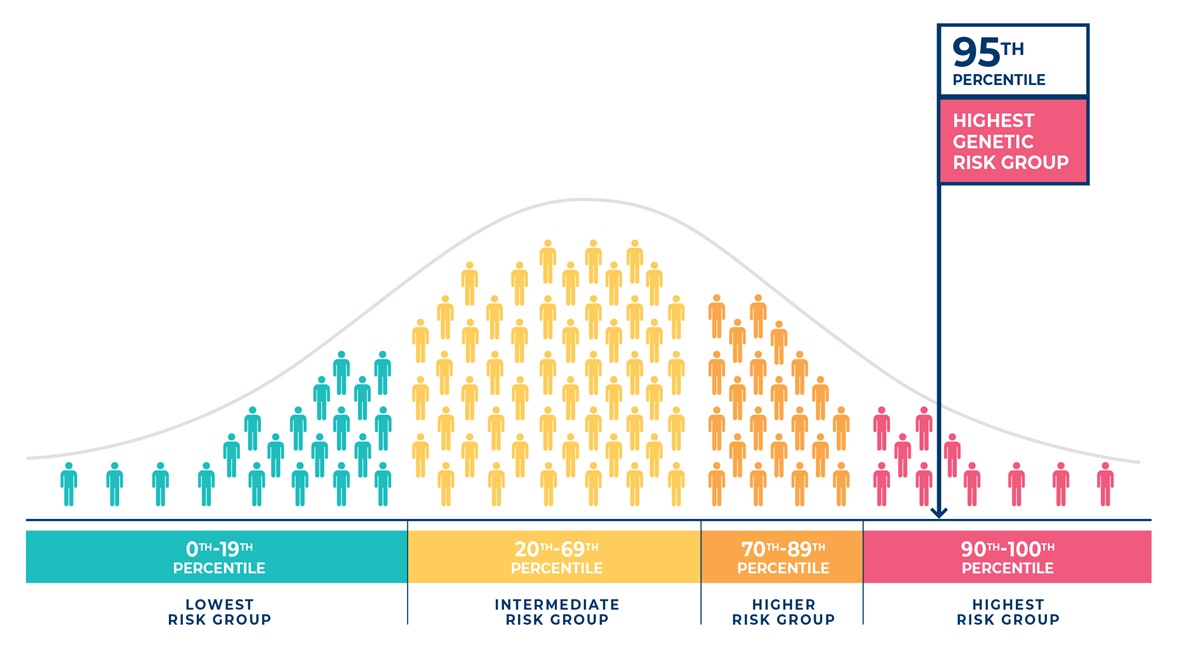
SightScore AMD is a polygenic risk score which combines the risk from many genetic variants to estimate a person’s genetic risk of developing Age-related Macular Degeneration (AMD) in future or, if they already have AMD, the risk their AMD might progress to more severe disease, relative to others in the community. SightScore is provided as a clinical genetics service.
SightScore assists clinicians to identify individuals at highest genetic risk of AMD, so they can be appropriately prioritized and managed, to increase the likelihood that any AMD or AMD progression can be detected earlier. It may also help clinicians identify those at lower genetic risk of AMD.
What is SightScore AMD?
SightScore AMD is a polygenic risk score which combines the risk from many genetic variants to estimate a person’s genetic risk of developing Age-related Macular Degeneration (AMD) in future or, if they already have AMD, the risk their AMD might progress to more severe disease, relative to others in the community. SightScore is provided as a clinical genetics service.
SightScore assists clinicians to identify individuals at highest genetic risk of AMD, so they can be appropriately prioritized and managed, to increase the likelihood that any AMD or AMD progression can be detected earlier. It may also help clinicians identify those at lower genetic risk of AMD.
Process
SightScore can be referred online by an appropriate health professional (usually an optometrist or ophthalmologist) and involves a simple saliva collection process, followed by genetic analysis, and receipt of clinical report in the secure online Seonix Clinician Portal. Saliva collection is simple and can be performed by the patient or health practitioner.
To refer your first patient, contact Seonix Bio at info@seonixbio.com and we will set you up with an account on the Seonix Clinician Portal. It’s easy to setup and referral is simple and fast.
Process
SightScore can be referred online by an appropriate health professional (usually an optometrist or ophthalmologist) and involves a simple saliva collection process, followed by genetic analysis, and receipt of clinical report in the secure online Seonix Clinician Portal. Saliva collection is simple and can be performed by the patient or health practitioner.
To refer your first patient, contact Seonix Bio at info@seonixbio.com and we will set you up with an account on the Seonix Clinician Portal. It’s easy to setup and referral is simple and fast.





Evidence
SightScore AMD is based on research and clinical validation published in leading journals. It was developed using genome wide associations studies using over 600,000 individuals1 and has been validated in a range of clinical cohorts2.
Evidence
SightScore AMD is based on research and clinical validation published in leading journals. It was developed using genome wide associations studies using over 600,000 individuals1 and has been validated in a range of clinical cohorts2.
Patient populations
SightScore can be requested for five patient populations:
- Unaffected individuals without a known family history of AMD
- Unaffected individuals with a known family history of AMD
- Normal aging changes
- Early/Intermediate AMD
- Late-stage AMD
Patient populations
SightScore can be requested for five patient populations:
- Unaffected individuals without a known family history of AMD
- Unaffected individuals with a known family history of AMD
- Normal aging changes
- Early/Intermediate AMD
- Late-stage AMD
Clinical uses
SightScore provides genetic risk information that may be useful for to assist a range of patient management decisions. It may be used in combination with a patient’s medical history, clinical risk factors and eye examination to consider:
- The age for a patient’s first AMD check,
- How often a patient should be monitored for AMD,
- When a patient should be prioritised for investigation by an ophthalmologist,
- Whether a patient is best monitored in optometry or ophthalmology,
- Management strategy for a patient with AMD, including lifestyle changes and some treatment decisions; and
- Whether blood relatives (parents, brothers/sisters, adult children) should be checked for AMD.
SightScore may also be useful for individuals to better understand their risk so they can be proactive in their healthcare.
Clinical uses
SightScore provides genetic risk information that may be useful for to assist a range of patient management decisions. It may be used in combination with a patient’s medical history, clinical risk factors and eye examination to consider:
- The age for a patient’s first AMD check,
- How often a patient should be monitored for AMD,
- When a patient should be prioritized for investigation by an ophthalmologist,
- Whether a patient is best monitored in optometry or ophthalmology,
- Management strategy for a patient with AMD, including lifestyle changes and some treatment decisions; and
- Whether blood relatives (parents, brothers/sisters, adult children) should be checked for AMD.
SightScore may also be useful for individuals to better understand their risk so they can be proactive in their healthcare.
References
- He W et al. Genome-Wide Meta-analysis Identifies Risk Loci and Improves Disease Prediction of Age-Related Macular Degeneration. Ophthalmology. 2024 Jan;131(1):16-29.
- Yu C, Robman L, He W, Woods RL, Phuong Thao LT, Wolfe R, Phung J, Makeyeva GA, Hodgson LAB, McNeil JJ, Guymer RH, MacGregor S, Lacaze P. Predictive Performance of an Updated Polygenic Risk Score for Age-Related Macular Degeneration. Ophthalmology. 2024 Aug;131(8):880-891.
References
- He W et al. Genome-Wide Meta-analysis Identifies Risk Loci and Improves Disease Prediction of Age-Related Macular Degeneration. Ophthalmology. 2024 Jan;131(1):16-29.
- Yu C, Robman L, He W, Woods RL, Phuong Thao LT, Wolfe R, Phung J, Makeyeva GA, Hodgson LAB, McNeil JJ, Guymer RH, MacGregor S, Lacaze P. Predictive Performance of an Updated Polygenic Risk Score for Age-Related Macular Degeneration. Ophthalmology. 2024 Aug;131(8):880-891.
FAQs
Humans share the same genetic code apart from some differences, called genetic variants, that make each of us unique. Some of these variants are known to increase the risk of developing certain health conditions, while others reduce the risk. It is possible to combine the risks from tens or millions of these genetic variants to estimate the overall risk of a person developing a particular health condition, such as AMD or glaucoma. This overall risk is known as a polygenic risk score. In some cases, a polygenic risk score may also be linked to the potential severity of the health condition and the way it might develop over time.
SightScore AMD is a polygenic risk score that tests for 70 common genetic variants that contribute to AMD disease risk, including in the Complement Factor H and Age-Related Maculopathy Susceptibility 2 (ARMS2) genes. These each have an accumulative effect on disease risk.
Occasionally, a person will have a very rare single variant in a key AMD gene that has a large impact on the risk of developing AMD. SightScore does not test for these rare variants and only provides an overall polygenic risk score. A healthcare practitioner may order separate testing of these variants in the fairly rare cases it is warranted, based on family history and other clinical considerations.
Blood relatives (e.g. parents, brothers/sisters, adult children) share parts of their genetic code and will have some of the same genetic variants. Thus, for conditions with a strong genetic contribution, such as AMD or glaucoma, a healthcare practitioner will take account of a person’s family history when assessing their risk.
However, a family history is not the same as a person’s individual genetic risk. It is possible to have a high genetic risk of AMD without a family history of the condition. It is also possible to have a family history of AMD and have a lower individual genetic risk. This is because a family history does not mean a person has personally inherited the genetic variants that increase the risk of AMD.
SightScore is a personalised test which uses a person’s own DNA to assess their individual genetic risk of developing AMD. It is important to understand that SightScore does not replace an accurate family history. Instead, it provides useful information about whether someone is at higher or lower risk than would be expected from their family history alone.
You refer online. Please contact Seonix Bio at info@seonixbio.com and we will set you up with an account on our secure Seonix Clinician Portal. It’s easy to setup and referral is simple and fast.
You will receive your patient’s report in the secure Seonix Clinician Portal. You will also receive an email notification.
Your patients report will normally be available in 4-6 weeks in the Seonix Clinician Portal.