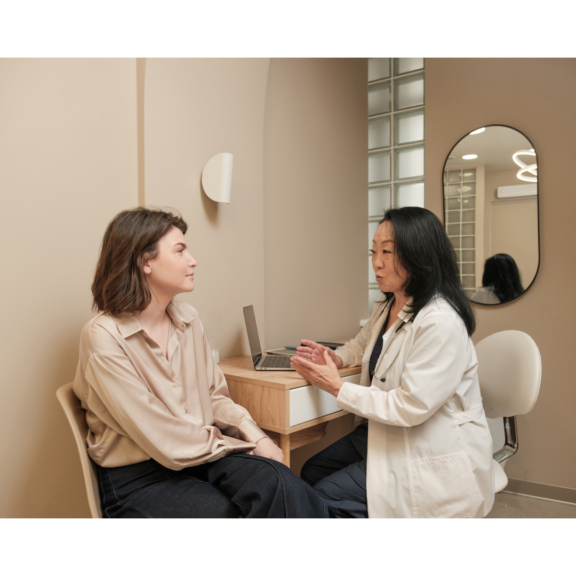
Genetic Counselling for Glaucoma: What Patients Need to Know
Glaucoma is one of the leading causes of irreversible vision loss worldwide, yet many people are unaware they are affected until significant damage has already occurred. As our understanding of the genetic contribution to glaucoma has advanced, genetic counselling has become an increasingly important part of care for individuals with glaucoma and their families.
This article explains what genetic counselling for glaucoma involves, when it may be helpful, what questions to ask, and how to understand genetic test results – particularly in the context of modern tests such as polygenic risk scores.
What is Primary Open Angle Glaucoma?
Primary Open Angle Glaucoma (often referred to simply as “glaucoma” as it is the most common type) is an eye condition in which vision loss occurs due to damage to the optic nerve. This damage is most commonly associated with increased pressure inside the eye, known as intraocular pressure.
In glaucoma, the eye’s drainage canals gradually become less efficient, preventing fluid from draining properly. As pressure builds, the optic nerve (which provides information from the eyes to the brain) is damaged over time. Vision loss usually occurs slowly and initially affects peripheral (side) vision. Because this progression is gradual, significant vision loss can occur before a person notices any symptoms.
Around 300,000 people have glaucoma in Australia and more than 3 million in the United States with approximately 1 in 200 people affected by age 40, increasing to 1 in 8 by age 80. It is 3-4 times more common in African Americans and Latino’s. Importantly, it is estimated that around 50% of glaucoma remains undiagnosed.
While vision lost to glaucoma cannot be restored, early diagnosis is crucial. Once detected, glaucoma can usually be managed successfully with eye drops, laser treatment, or surgery to slow or prevent further vision loss.
The Genetic Component of Glaucoma
Glaucoma has a strong genetic component. People with a family history of glaucoma—such as an affected parent, sibling, or child—have a higher risk of developing the condition themselves. However, genetics is only one piece of the puzzle.
The risk that someone will develop glaucoma, or that existing glaucoma will worsen, depends on a combination of factors, including:
- Demographic factors, such as age over 50, family history of glaucoma, or African ancestry
- Clinical features, including eye pressure, optic nerve appearance, and visual field changes
- Genetic factors, including variations in genes known to influence glaucoma risk
Understanding how these factors interact is where genetic counselling can be particularly valuable.
When Should You Seek Genetic Counselling for Glaucoma?
Genetic counselling for glaucoma may be helpful if you:
- Have been diagnosed with glaucoma, particularly at a younger age
- Have a strong family history of glaucoma
- Are a glaucoma suspect or have ocular hypertension
- Have close relatives who are concerned about their own risk
- Are considering genetic testing and want to understand the benefits and limitations
- Have received genetic test results and want help interpreting them
Genetic counselling is not just about testing—it is about understanding risk, uncertainty, and how genetic information can (and cannot) guide healthcare decisions.
How Can Genetics Be Used to Assess Glaucoma Risk?
Humans share most of their genetic code, but small differences—called genetic variants—make each of us unique. Some of these variants slightly increase the risk of developing glaucoma, while others reduce it.
Genetic testing is widely used to diagnose diseases, caused by changes in a single gene (called monogenic testing). However, many diseases – including glaucoma – are polygenic, that is they are influenced by a large number of genetic variants scattered throughout the genome.
Genetic testing for glaucoma can now combines information from millions of genetic variants to estimate a person’s overall genetic risk. This approach allows clinicians to assess whether someone’s risk is higher or lower than average compared to others in the community.
For people who already have glaucoma, genetic risk information may also help estimate the likelihood of disease progression over time.
Family History vs Individual Genetic Risk
Family history is an important clue, but it is not the same as individual genetic risk.
Close relatives share parts of their genetic code, which is why glaucoma can run in families. However:
- It is possible to have a high genetic risk without a known family history
- It is also possible to have a family history but a lower individual genetic risk
This is because inheriting glaucoma-associated genetic variants is not guaranteed, even within the same family. Analysing an individual’s DNA can therefore provide information beyond what family history alone can offer.
What Is a Polygenic Risk Score?
A polygenic risk score (PRS) combines the effects of many genetic variants across the genome to estimate the likelihood of developing a condition such as glaucoma.
In glaucoma, a PRS may help estimate:
- Future risk of developing glaucoma
- Risk of disease progression in those already diagnosed
- Relative risk compared with others of similar age
It is important to understand that a PRS does not diagnose glaucoma. Instead, it provides probabilistic information that is interpreted alongside clinical findings and family history.
How Is Genetic Testing Performed?
Genetic testing for glaucoma is typically performed using a saliva sample. DNA is extracted and analysed for relevant genetic variants.
SightScore™ is a clinical genetic testing service provided by Seonix Bio. It estimates a person’s genetic risk of developing adult-onset primary open angle glaucoma, or the likelihood of progression if glaucoma is already present.
- If you have glaucoma or symptoms, SightScore must be ordered by an appropriate health practitioner, usually an optometrist or ophthalmologist
- If you do not have glaucoma or symptoms, testing may be accessed through the SightScore Family testing service
SightScore does not assess angle closure glaucoma or congenital glaucoma.
What Happens in Genetic Counselling?
During genetic counselling for glaucoma, a genetic counsellor may:
- Review your personal and family history
- Explain the genetic basis of glaucoma in plain language
- Discuss the benefits, limitations, and uncertainties of genetic testing
- Explore the emotional, practical, and insurance implications of testing
- Help interpret results and place them in clinical context
Counselling is non-directive—its goal is to support informed decision-making, not to tell you what to do.
What Questions Should Patients Ask?
Helpful questions to ask during genetic counselling include:
- What does my genetic risk result actually mean for me?
- How can my eye health provider and I use this information to guide my eye care or monitoring?
- What does this mean for my children or siblings?
- What are the limitations of this test?
- Could these results affect my insurance?
In Australia, there is currently a moratorium on the use of genetic test results in life insurance up to specific policy limits, which your counsellor can explain in more detail.
How Can Genetic Risk Information Be Used?
When combined with clinical examination and medical history, genetic risk information may help you and your eye health provider consider:
- When to begin glaucoma screening
- How frequently eye checks should occur
- Whether care is best managed by an optometrist or ophthalmologist
- Treatment intensity and monitoring strategies
- Whether family members should be screened
For patients, understanding genetic risk can also support proactive engagement with eye health.
Final Thoughts
Genetic counselling for glaucoma empowers patients and families with knowledge—while also acknowledging uncertainty. It does not replace clinical care, but it can enhance personalised risk assessment and support earlier detection, better monitoring, and informed family discussions.
If you or your family are affected by glaucoma, genetic counselling may be a valuable step in understanding risk and determining whether genetic testing is useful for you so you can best protect your future vision.
___________________________________________________________________________
Wondering if genetic testing is right for you? Visit seonixbio.com or discuss SightScore™ with your eye care provider.
Genetic Counselling for Glaucoma: What Patients Need to Know
Glaucoma is one of the leading causes of irreversible vision loss worldwide, yet many people are unaware they are affected until significant damage has already occurred. As our understanding of the genetic contribution to glaucoma has advanced, genetic counselling has become an increasingly important part of care for individuals with glaucoma and their families.
This article explains what genetic counselling for glaucoma involves, when it may be helpful, what questions to ask, and how to understand genetic test results – particularly in the context of modern tests such as polygenic risk scores.
What is Primary Open Angle Glaucoma?
Primary Open Angle Glaucoma (often referred to simply as “glaucoma” as it is the most common type) is an eye condition in which vision loss occurs due to damage to the optic nerve. This damage is most commonly associated with increased pressure inside the eye, known as intraocular pressure.
In glaucoma, the eye’s drainage canals gradually become less efficient, preventing fluid from draining properly. As pressure builds, the optic nerve (which provides information from the eyes to the brain) is damaged over time. Vision loss usually occurs slowly and initially affects peripheral (side) vision. Because this progression is gradual, significant vision loss can occur before a person notices any symptoms.
Around 300,000 people have glaucoma in Australia and more than 3 million in the United States with approximately 1 in 200 people affected by age 40, increasing to 1 in 8 by age 80. It is 3-4 times more common in African Americans and Latino’s. Importantly, it is estimated that around 50% of glaucoma remains undiagnosed.
While vision lost to glaucoma cannot be restored, early diagnosis is crucial. Once detected, glaucoma can usually be managed successfully with eye drops, laser treatment, or surgery to slow or prevent further vision loss.
The Genetic Component of Glaucoma
Glaucoma has a strong genetic component. People with a family history of glaucoma—such as an affected parent, sibling, or child—have a higher risk of developing the condition themselves. However, genetics is only one piece of the puzzle.
The risk that someone will develop glaucoma, or that existing glaucoma will worsen, depends on a combination of factors, including:
- Demographic factors, such as age over 50, family history of glaucoma, or African ancestry
- Clinical features, including eye pressure, optic nerve appearance, and visual field changes
- Genetic factors, including variations in genes known to influence glaucoma risk
Understanding how these factors interact is where genetic counselling can be particularly valuable.
When Should You Seek Genetic Counselling for Glaucoma?
Genetic counselling for glaucoma may be helpful if you:
- Have been diagnosed with glaucoma, particularly at a younger age
- Have a strong family history of glaucoma
- Are a glaucoma suspect or have ocular hypertension
- Have close relatives who are concerned about their own risk
- Are considering genetic testing and want to understand the benefits and limitations
- Have received genetic test results and want help interpreting them
Genetic counselling is not just about testing—it is about understanding risk, uncertainty, and how genetic information can (and cannot) guide healthcare decisions.
How Can Genetics Be Used to Assess Glaucoma Risk?
Humans share most of their genetic code, but small differences—called genetic variants—make each of us unique. Some of these variants slightly increase the risk of developing glaucoma, while others reduce it.
Genetic testing is widely used to diagnose diseases, caused by changes in a single gene (called monogenic testing). However, many diseases – including glaucoma – are polygenic, that is they are influenced by a large number of genetic variants scattered throughout the genome.
Genetic testing for glaucoma can now combines information from millions of genetic variants to estimate a person’s overall genetic risk. This approach allows clinicians to assess whether someone’s risk is higher or lower than average compared to others in the community.
For people who already have glaucoma, genetic risk information may also help estimate the likelihood of disease progression over time.
Family History vs Individual Genetic Risk
Family history is an important clue, but it is not the same as individual genetic risk.
Close relatives share parts of their genetic code, which is why glaucoma can run in families. However:
- It is possible to have a high genetic risk without a known family history
- It is also possible to have a family history but a lower individual genetic risk
This is because inheriting glaucoma-associated genetic variants is not guaranteed, even within the same family. Analysing an individual’s DNA can therefore provide information beyond what family history alone can offer.
What Is a Polygenic Risk Score?
A polygenic risk score (PRS) combines the effects of many genetic variants across the genome to estimate the likelihood of developing a condition such as glaucoma.
In glaucoma, a PRS may help estimate:
- Future risk of developing glaucoma
- Risk of disease progression in those already diagnosed
- Relative risk compared with others of similar age
It is important to understand that a PRS does not diagnose glaucoma. Instead, it provides probabilistic information that is interpreted alongside clinical findings and family history.
How Is Genetic Testing Performed?
Genetic testing for glaucoma is typically performed using a saliva sample. DNA is extracted and analysed for relevant genetic variants.
SightScore™ is a clinical genetic testing service provided by Seonix Bio. It estimates a person’s genetic risk of developing adult-onset primary open angle glaucoma, or the likelihood of progression if glaucoma is already present.
- If you have glaucoma or symptoms, SightScore must be ordered by an appropriate health practitioner, usually an optometrist or ophthalmologist
- If you do not have glaucoma or symptoms, testing may be accessed through the SightScore Family testing service
SightScore does not assess angle closure glaucoma or congenital glaucoma.
What Happens in Genetic Counselling?
During genetic counselling for glaucoma, a genetic counsellor may:
- Review your personal and family history
- Explain the genetic basis of glaucoma in plain language
- Discuss the benefits, limitations, and uncertainties of genetic testing
- Explore the emotional, practical, and insurance implications of testing
- Help interpret results and place them in clinical context
Counselling is non-directive—its goal is to support informed decision-making, not to tell you what to do.
What Questions Should Patients Ask?
Helpful questions to ask during genetic counselling include:
- What does my genetic risk result actually mean for me?
- How can my eye health provider and I use this information to guide my eye care or monitoring?
- What does this mean for my children or siblings?
- What are the limitations of this test?
- Could these results affect my insurance?
In Australia, there is currently a moratorium on the use of genetic test results in life insurance up to specific policy limits, which your counsellor can explain in more detail.
How Can Genetic Risk Information Be Used?
When combined with clinical examination and medical history, genetic risk information may help you and your eye health provider consider:
- When to begin glaucoma screening
- How frequently eye checks should occur
- Whether care is best managed by an optometrist or ophthalmologist
- Treatment intensity and monitoring strategies
- Whether family members should be screened
For patients, understanding genetic risk can also support proactive engagement with eye health.
Final Thoughts
Genetic counselling for glaucoma empowers patients and families with knowledge—while also acknowledging uncertainty. It does not replace clinical care, but it can enhance personalised risk assessment and support earlier detection, better monitoring, and informed family discussions.
If you or your family are affected by glaucoma, genetic counselling may be a valuable step in understanding risk and determining whether genetic testing is useful for you so you can best protect your future vision.
___________________________________________________________________________
Wondering if genetic testing is right for you? Visit seonixbio.com or discuss SightScore™ with your eye care provider.