5 Common Myths About Glaucoma Genetic Testing Debunked
Genetic testing can be a powerful tool for understanding your risk of developing glaucoma, or your glaucoma progressing if you already have it. However, misconceptions can be harmful. Let’s separate fact from fiction and address the most common myths about genetic testing for glaucoma.
Myth 1: “Genetic Testing Will Tell Me if I’ll Definitely Get Glaucoma”
The Reality:
SightScore tells you about your future risk, but it is not your destiny.
Your polygenic risk score indicates whether you’re at higher, average, or lower risk of glaucoma compared to others in the community, but it doesn’t predict the future with absolute certainty. A high SightScore™ result does not mean you will definitely develop glaucoma in the future, or, if you already have glaucoma, it will definitely get worse. A high genetic risk score means you’re more likely to develop glaucoma than most people in the community, but people with high genetic risk can have good visual outcomes, especially with regular monitoring and early intervention. Equally, a low-risk score does not rule out the possibility of developing glaucoma or that existing glaucoma will get worse in the future. Other factors, including physical trauma to the eye, can play a role in your risk of glaucoma.
The truth: Genetic testing helps you understand your risk so you and your eye care provider can create an appropriate monitoring plan. It’s a guide for prevention, not a crystal ball into outcomes.
Myth 2: “If I Have High Genetic Risk, There’s Nothing I Can Do About It”
The Reality:
This is perhaps the most harmful myth because it’s the opposite of the truth. Knowing you have high genetic risk is empowering – it gives you the opportunity to take action before damage occurs.
People with high genetic risk can organise appropriate screening and intervention with their eye health provider before they have signs of vision loss associated with glaucoma. Interventions may include:
- Starting regular eye examinations earlier
- Having more frequent monitoring to catch early changes
- Beginning treatments at lower thresholds
- Making informed lifestyle choices that support eye health
- Communicating with family members so they are aware of their own risk and monitored accordingly
Research shows that individuals with high genetic risk who are monitored appropriately can often reduce their likelihood of significant vision loss through early detection and timely intervention.
The truth: High genetic risk means you need more vigilance, not resignation.
Early knowledge = better outcomes.
Myth 3: “Genetic Testing Is Only for People with Family History”
The Reality:
Blood relatives share parts of their genetic code and will have some of the same genetic variants. For conditions with a strong genetic contribution, such as glaucoma, a healthcare practitioner will take account of a person’s family history when assessing their risk.
However, a family history is not the same as a person’s individual genetic risk. This is because a family history does not mean a person has personally inherited the genetic variants that increase the risk of glaucoma. SightScore™ assesses millions of genetic variants that can increase or decrease an individual’s risk of glaucoma.
First degree relatives (e.g. parents, brothers/sisters, children) of a person with glaucoma have a 1 in 4 risk of developing glaucoma in their lifetime. Although, you can have a family history but low personal risk of glaucoma. It is also possible to have a high genetic risk of glaucoma without a family history of the condition. Around 40% of people who develop glaucoma have no family history. SightScore™ is a personalised genetic test which uses your own DNA to assess your individual risk of developing glaucoma.
The truth: Genetic testing provides valuable information for everyone, whether or not you have known family history. Your genes tell your story, not just your family’s.
Myth 4: “Genetic Testing Will Replace My Regular Eye Exams”
The Reality:
Genetic testing and regular eye examinations work together – they don’t replace each other. Think of them as complementary tools in your vision protection toolkit.
Genetic testing tells you about your inherited susceptibility, your baseline risk that stays constant throughout your life. Regular eye exams monitor what’s actually happening in your eyes right now: measuring eye pressure, examining your optic nerve, and checking your visual field.
Both are essential:
- Genetic testing guides how often you need eye exams and how vigilant to be
- Eye exams detect actual disease development and progression
- Together, they provide a picture of your eye health
The truth: Genetic testing enhances your eye care by personalising your monitoring schedule, but it doesn’t eliminate the need for regular check-ups.
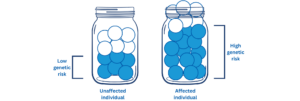
You can think of genetic variants like marbles in jar –the amount of marbles represents your risk of developing glaucoma. Given the same screening and treatment, an individual with high genetic risk [more ‘genetic marbles’] is more likely to have an overflowing jar, representing glaucoma development or progression, compared to an individual with lower genetic risk [less ‘genetic marbles’].
Myth 5: “The Test Is Complicated, Painful, or Invasive”
The Reality:
Modern genetic testing for glaucoma couldn’t be simpler. There are no needles, no blood draws, and no complex procedures. The entire process involves:
- Rubbing a soft sponge along your gums for a few seconds
- Placing the sample in a tube
- Posting it in a prepaid envelope
The collection takes less than five minutes and can be done at home. It’s actually easier than most routine medical tests. The science behind analysing your DNA is sophisticated, but the patient experience is remarkably straightforward.
The truth: Genetic testing is one of the easiest medical tests you’ll ever take, simpler than a blood test, and you can do it at home.
Bonus Myth: “My Genetic Information Isn’t Private”
The Reality:
Genetic privacy is protected by strict regulations. Your genetic information is managed through secure, encrypted systems, and cannot be shared without your explicit consent. In Australia, genetic information is protected under privacy laws, and genetic discrimination is prohibited in many contexts.
Reputable genetic testing services like SightScore™ maintain rigorous privacy standards and never share your information with third parties without permission.
The Bottom Line
Myths about genetic testing can prevent people from accessing valuable information about their glaucoma risk. The reality is that genetic testing is:
- A probability tool, not a crystal ball
- Empowering, enabling early action for high-risk individuals
- Valuable for everyone, not just those with family history
- Complementary to regular eye exams, not a replacement
- Simple, painless, and can be done at home
- Private and protected by strict regulations
Understanding the facts about genetic testing helps you make informed decisions about your eye health. Rather than avoiding testing because of misconceptions, talk to your eye care provider about how genetic testing might benefit your specific situation.
Knowledge truly is power when it comes to protecting your vision, and genetic testing provides knowledge that can guide your eye care for life.
________________________________________________________________________________
Ready to learn the facts about genetic testing? Visit seonixbio.com or speak with your eye care provider about SightScore™.
5 Common Myths About Glaucoma Genetic Testing Debunked
Genetic testing can be a powerful tool for understanding your risk of developing glaucoma, or your glaucoma progressing if you already have it. However, misconceptions can be harmful. Let’s separate fact from fiction and address the most common myths about genetic testing for glaucoma.
Myth 1: “Genetic Testing Will Tell Me if I’ll Definitely Get Glaucoma”
The Reality:
SightScore tells you about your future risk, but it is not your destiny.
Your polygenic risk score indicates whether you’re at higher, average, or lower risk of glaucoma compared to others in the community, but it doesn’t predict the future with absolute certainty. A high SightScore™ result does not mean you will definitely develop glaucoma in the future, or, if you already have glaucoma, it will definitely get worse. A high genetic risk score means you’re more likely to develop glaucoma than most people in the community, but people with high genetic risk can have good visual outcomes, especially with regular monitoring and early intervention. Equally, a low-risk score does not rule out the possibility of developing glaucoma or that existing glaucoma will get worse in the future. Other factors, including physical trauma to the eye, can play a role in your risk of glaucoma.
The truth: Genetic testing helps you understand your risk so you and your eye care provider can create an appropriate monitoring plan. It’s a guide for prevention, not a crystal ball into outcomes.
Myth 2: “If I Have High Genetic Risk, There’s Nothing I Can Do About It”
The Reality:
This is perhaps the most harmful myth because it’s the opposite of the truth. Knowing you have high genetic risk is empowering – it gives you the opportunity to take action before damage occurs.
People with high genetic risk can organise appropriate screening and intervention with their eye health provider before they have signs of vision loss associated with glaucoma. Interventions may include:
- Starting regular eye examinations earlier
- Having more frequent monitoring to catch early changes
- Beginning treatments at lower thresholds
- Making informed lifestyle choices that support eye health
- Communicating with family members so they are aware of their own risk and monitored accordingly
Research shows that individuals with high genetic risk who are monitored appropriately can often reduce their likelihood of significant vision loss through early detection and timely intervention.
The truth: High genetic risk means you need more vigilance, not resignation.
Early knowledge = better outcomes.
Myth 3: “Genetic Testing Is Only for People with Family History”
The Reality:
Blood relatives share parts of their genetic code and will have some of the same genetic variants. For conditions with a strong genetic contribution, such as glaucoma, a healthcare practitioner will take account of a person’s family history when assessing their risk.
However, a family history is not the same as a person’s individual genetic risk. This is because a family history does not mean a person has personally inherited the genetic variants that increase the risk of glaucoma. SightScore™ assesses millions of genetic variants that can increase or decrease an individual’s risk of glaucoma.
First degree relatives (e.g. parents, brothers/sisters, children) of a person with glaucoma have a 1 in 4 risk of developing glaucoma in their lifetime. Although, you can have a family history but low personal risk of glaucoma. It is also possible to have a high genetic risk of glaucoma without a family history of the condition. Around 40% of people who develop glaucoma have no family history. SightScore™ is a personalised genetic test which uses your own DNA to assess your individual risk of developing glaucoma.
The truth: Genetic testing provides valuable information for everyone, whether or not you have known family history. Your genes tell your story, not just your family’s.
Myth 4: “Genetic Testing Will Replace My Regular Eye Exams”
The Reality:
Genetic testing and regular eye examinations work together – they don’t replace each other. Think of them as complementary tools in your vision protection toolkit.
Genetic testing tells you about your inherited susceptibility, your baseline risk that stays constant throughout your life. Regular eye exams monitor what’s actually happening in your eyes right now: measuring eye pressure, examining your optic nerve, and checking your visual field.
Both are essential:
- Genetic testing guides how often you need eye exams and how vigilant to be
- Eye exams detect actual disease development and progression
- Together, they provide a picture of your eye health
The truth: Genetic testing enhances your eye care by personalising your monitoring schedule, but it doesn’t eliminate the need for regular check-ups.
You can think of genetic variants like marbles in jar –the amount of marbles represents your risk of developing glaucoma. Given the same screening and treatment, an individual with high genetic risk [more ‘genetic marbles’] is more likely to have an overflowing jar, representing glaucoma development or progression, compared to an individual with lower genetic risk [less ‘genetic marbles’].
Myth 5: “The Test Is Complicated, Painful, or Invasive”
The Reality:
Modern genetic testing for glaucoma couldn’t be simpler. There are no needles, no blood draws, and no complex procedures. The entire process involves:
- Rubbing a soft sponge along your gums for a few seconds
- Placing the sample in a tube
- Posting it in a prepaid envelope
The collection takes less than five minutes and can be done at home. It’s actually easier than most routine medical tests. The science behind analysing your DNA is sophisticated, but the patient experience is remarkably straightforward.
The truth: Genetic testing is one of the easiest medical tests you’ll ever take, simpler than a blood test, and you can do it at home.
Bonus Myth: “My Genetic Information Isn’t Private”
The Reality:
Genetic privacy is protected by strict regulations. Your genetic information is managed through secure, encrypted systems, and cannot be shared without your explicit consent. In Australia, genetic information is protected under privacy laws, and genetic discrimination is prohibited in many contexts.
Reputable genetic testing services like SightScore™ maintain rigorous privacy standards and never share your information with third parties without permission.
The Bottom Line
Myths about genetic testing can prevent people from accessing valuable information about their glaucoma risk. The reality is that genetic testing is:
- A probability tool, not a crystal ball
- Empowering, enabling early action for high-risk individuals
- Valuable for everyone, not just those with family history
- Complementary to regular eye exams, not a replacement
- Simple, painless, and can be done at home
- Private and protected by strict regulations
Understanding the facts about genetic testing helps you make informed decisions about your eye health. Rather than avoiding testing because of misconceptions, talk to your eye care provider about how genetic testing might benefit your specific situation.
Knowledge truly is power when it comes to protecting your vision, and genetic testing provides knowledge that can guide your eye care for life.
________________________________________________________________________________
Ready to learn the facts about genetic testing? Visit seonixbio.com or speak with your eye care provider about SightScore™.