Early Detection Saves Sight: Why Genetic Testing Matters for Glaucoma
Imagine losing your peripheral vision so gradually that you don’t notice it’s happening. By the time you realise something is wrong, significant damage has already occurred – damage that can never be reversed. This is the reality of glaucoma, often called the “silent thief of sight.” But what if you could identify your risk years before symptoms appear? This is where genetic testing is changing the game.
The Hidden Threat of Glaucoma
Glaucoma is the leading cause of irreversible blindness worldwide, affecting over 80 million people globally. The numbers are expected to rise significantly as populations age. What makes glaucoma particularly dangerous is its stealthy progression – approximately half of all people with glaucoma in developed countries don’t even know they have it.
Primary open-angle glaucoma (POAG), the most common form, typically develops without any noticeable symptoms in its early stages. There’s no pain, no obvious vision changes, and no warning signs. By the time vision loss becomes apparent, substantial and permanent damage has already occurred to the optic nerve.
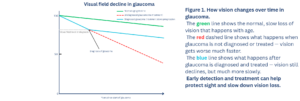
Here’s the crucial fact: existing treatments cannot restore vision that has been lost to glaucoma. Once those nerve fibres are damaged, they’re gone forever. This makes early detection not just important – it’s absolutely critical.
The Current Detection Challenge
Traditional glaucoma screening relies on detecting changes that have already begun – elevated eye pressure, changes to the optic nerve appearance, or vision loss on visual field tests. The problem is that by the time these changes are detectable, the disease process has already started.
Even more challenging, glaucoma progression varies widely between individuals. Some people experience rapid deterioration, while others progress slowly over many years. Current surveillance techniques require considerable time to distinguish between slow and fast progressors, during which preventable damage may occur.
This is where the timing gap becomes critical. Many patients aren’t diagnosed until irreversible damage to their vision has already taken place. Research published in Nature Genetics highlights that late presentation is a major risk factor for blindness, making earlier detection strategies urgently needed.
How Genetic Testing Changes the Timeline
Genetic testing for glaucoma offers something revolutionary: the ability to identify high-risk individuals before any disease signs appear. Your genetic risk doesn’t change – it’s been part of your DNA since birth. This means genetic testing can flag risk before traditional screening methods would detect anything amiss.
Recent groundbreaking research published in Nature Genetics demonstrates just how powerful this early warning system can be. The study found that individuals with the highest genetic risk scores (top 10% of the population) reach the same absolute risk for glaucoma a full 10 years earlier than those with the lowest genetic risk.
Think about what this means in practical terms: if someone with low genetic risk might typically develop glaucoma at age 69, someone with high genetic risk could develop it by age 59. That’s a decade of potential vision loss that could be prevented with appropriate monitoring and early intervention.
The Power of Early Intervention
The good news is that when glaucoma is caught early, current treatments are highly effective at preventing or slowing vision loss. These include:
- Prescription eye drops to lower eye pressure
- Laser treatments to improve fluid drainage
- Minimally invasive surgical procedures
- Advanced surgical interventions when needed
Research shows that these interventions work best when started early, before significant damage occurs. A study in the journal Translational Vision Science & Technology emphasises that early intervention with topical medications, laser, or incisional surgery can prevent otherwise irreversible vision loss.
But early treatment requires early detection – and that’s exactly what genetic risk assessment provides.
Real-World Impact: What the Research Shows
The clinical benefits of genetic testing for glaucoma aren’t theoretical – they’re backed by robust scientific evidence:
Better Risk Stratification
Studies show that genetic risk scores can identify 40% of early-onset glaucoma cases in the critical 50-60 age bracket by screening just the top 10% of genetic risk. This targeted approach makes screening programmes more efficient and cost-effective.
Predicting Disease Progression
Genetic testing does not just predict who will develop glaucoma – it can also forecast how aggressively the disease will progress. Research published in Nature Genetics demonstrated that people with higher genetic risk scores showed faster rates of retinal nerve fibre layer thinning, even after accounting for other known risk factors.
Identifying Surgical Candidates
The same research found that individuals with high genetic risk were significantly more likely to require surgical intervention to control their glaucoma, even when other factors were taken into account. This information helps doctors and patients plan more effectively for long-term disease management.
A Personalised Approach to Eye Care
Genetic testing enables a truly personalised approach to glaucoma prevention and management. Instead of applying the same screening schedule to everyone, healthcare providers can tailor their approach based on individual genetic risk:
For High-Risk Individuals:
- Earlier baseline eye examinations (potentially starting in their 40s)
- More frequent monitoring appointments
- Lower thresholds for starting preventive treatment
- Heightened awareness of subtle changes that might signal disease onset
For Lower-Risk Individuals:
- Standard screening schedules may be appropriate
- Reduced anxiety from knowing their baseline risk is lower
This risk-stratified approach, supported by research in leading journals like Nature Genetics and JAMA Ophthalmology, ensures that healthcare resources are directed where they’re most needed while providing peace of mind to those at lower risk.
The Window of Opportunity
One of glaucoma’s defining characteristics is its long preclinical phase – the period before symptoms become noticeable. Genetic testing allows us to identify and act during this critical window.
Consider the typical trajectory: Someone with high genetic risk might begin developing microscopic changes to their optic nerve in their 50s, but not experience noticeable vision changes until their 60s or later. Traditional screening might catch the disease in its early stages if they’re fortunate. But genetic testing, combined with appropriate monitoring, can flag their risk in their 40s or even earlier – providing 10-20 years of opportunity for preventive care.
This extended timeline is invaluable. It provides time for lifestyle modifications, regular monitoring to catch the earliest changes, and prompt treatment before any vision is lost.
Beyond Genetics: A Comprehensive Approach
It’s important to understand that genetic testing is a powerful tool, but it works best as part of a comprehensive approach to eye health. Genetic risk is just one piece of the puzzle, alongside:
- Regular eye examinations and pressure checks
- Family history assessment
- Management of overall health conditions like diabetes and high blood pressure
- Healthy lifestyle factors
- Age-appropriate screening protocols
Your genetic risk score provides the foundation for a personalised prevention plan, but that plan succeeds through ongoing partnership with your eye care provider.
The Cost of Delayed Detection
The impact of late glaucoma detection extends far beyond clinical measurements. Vision loss affects quality of life, independence, and even life expectancy. People with advanced glaucoma face increased risks of falls, difficulty driving, challenges with daily activities, and reduced social engagement.
Taking Control of Your Vision Future
The emergence of genetic testing for glaucoma represents a fundamental shift in how we approach this sight-threatening condition. For the first time, we can identify risk before damage begins, personalise monitoring based on individual susceptibility, and intervene at the optimal time to preserve vision.
If you have a family history of glaucoma, are concerned about your eye health, or simply want to be proactive about preserving your vision, genetic testing offers valuable information that can guide your care for decades to come.
Remember: glaucoma damage is irreversible, but it’s also largely preventable when caught early. Genetic testing provides the earliest possible warning – giving you and your healthcare team the best possible chance to protect your sight for life.
______________________________________________________________________
Ready to learn more about your genetic risk for glaucoma? Visit seonixbio.com to discover how SightScore genetic testing can help protect your vision, or speak with your eye care provider about whether genetic testing is right for you.
Early Detection Saves Sight: Why Genetic Testing Matters for Glaucoma
Imagine losing your peripheral vision so gradually that you don’t notice it’s happening. By the time you realise something is wrong, significant damage has already occurred – damage that can never be reversed. This is the reality of glaucoma, often called the “silent thief of sight.” But what if you could identify your risk years before symptoms appear? This is where genetic testing is changing the game.
The Hidden Threat of Glaucoma
Glaucoma is the leading cause of irreversible blindness worldwide, affecting over 80 million people globally. The numbers are expected to rise significantly as populations age. What makes glaucoma particularly dangerous is its stealthy progression – approximately half of all people with glaucoma in developed countries don’t even know they have it.
Primary open-angle glaucoma (POAG), the most common form, typically develops without any noticeable symptoms in its early stages. There’s no pain, no obvious vision changes, and no warning signs. By the time vision loss becomes apparent, substantial and permanent damage has already occurred to the optic nerve.
Here’s the crucial fact: existing treatments cannot restore vision that has been lost to glaucoma. Once those nerve fibres are damaged, they’re gone forever. This makes early detection not just important – it’s absolutely critical.
The Current Detection Challenge
Traditional glaucoma screening relies on detecting changes that have already begun – elevated eye pressure, changes to the optic nerve appearance, or vision loss on visual field tests. The problem is that by the time these changes are detectable, the disease process has already started.
Even more challenging, glaucoma progression varies widely between individuals. Some people experience rapid deterioration, while others progress slowly over many years. Current surveillance techniques require considerable time to distinguish between slow and fast progressors, during which preventable damage may occur.
This is where the timing gap becomes critical. Many patients aren’t diagnosed until irreversible damage to their vision has already taken place. Research published in Nature Genetics highlights that late presentation is a major risk factor for blindness, making earlier detection strategies urgently needed.
How Genetic Testing Changes the Timeline
Genetic testing for glaucoma offers something revolutionary: the ability to identify high-risk individuals before any disease signs appear. Your genetic risk doesn’t change – it’s been part of your DNA since birth. This means genetic testing can flag risk before traditional screening methods would detect anything amiss.
Recent groundbreaking research published in Nature Genetics demonstrates just how powerful this early warning system can be. The study found that individuals with the highest genetic risk scores (top 10% of the population) reach the same absolute risk for glaucoma a full 10 years earlier than those with the lowest genetic risk.
Think about what this means in practical terms: if someone with low genetic risk might typically develop glaucoma at age 69, someone with high genetic risk could develop it by age 59. That’s a decade of potential vision loss that could be prevented with appropriate monitoring and early intervention.
The Power of Early Intervention
The good news is that when glaucoma is caught early, current treatments are highly effective at preventing or slowing vision loss. These include:
- Prescription eye drops to lower eye pressure
- Laser treatments to improve fluid drainage
- Minimally invasive surgical procedures
- Advanced surgical interventions when needed
Research shows that these interventions work best when started early, before significant damage occurs. A study in the journal Translational Vision Science & Technology emphasises that early intervention with topical medications, laser, or incisional surgery can prevent otherwise irreversible vision loss.
But early treatment requires early detection – and that’s exactly what genetic risk assessment provides.
Real-World Impact: What the Research Shows
The clinical benefits of genetic testing for glaucoma aren’t theoretical – they’re backed by robust scientific evidence:
Better Risk Stratification
Studies show that genetic risk scores can identify 40% of early-onset glaucoma cases in the critical 50-60 age bracket by screening just the top 10% of genetic risk. This targeted approach makes screening programmes more efficient and cost-effective.
Predicting Disease Progression
Genetic testing does not just predict who will develop glaucoma – it can also forecast how aggressively the disease will progress. Research published in Nature Genetics demonstrated that people with higher genetic risk scores showed faster rates of retinal nerve fibre layer thinning, even after accounting for other known risk factors.
Identifying Surgical Candidates
The same research found that individuals with high genetic risk were significantly more likely to require surgical intervention to control their glaucoma, even when other factors were taken into account. This information helps doctors and patients plan more effectively for long-term disease management.
A Personalized Approach to Eye Care
Genetic testing enables a truly personalised approach to glaucoma prevention and management. Instead of applying the same screening schedule to everyone, healthcare providers can tailor their approach based on individual genetic risk:
For High-Risk Individuals:
- Earlier baseline eye examinations (potentially starting in their 40s)
- More frequent monitoring appointments
- Lower thresholds for starting preventive treatment
- Heightened awareness of subtle changes that might signal disease onset
For Lower-Risk Individuals:
- Standard screening schedules may be appropriate
- Reduced anxiety from knowing their baseline risk is lower
This risk-stratified approach, supported by research in leading journals like Nature Genetics and JAMA Ophthalmology, ensures that healthcare resources are directed where they’re most needed while providing peace of mind to those at lower risk.
The Window of Opportunity
One of glaucoma’s defining characteristics is its long preclinical phase – the period before symptoms become noticeable. Genetic testing allows us to identify and act during this critical window.
Consider the typical trajectory: Someone with high genetic risk might begin developing microscopic changes to their optic nerve in their 50s, but not experience noticeable vision changes until their 60s or later. Traditional screening might catch the disease in its early stages if they’re fortunate. But genetic testing, combined with appropriate monitoring, can flag their risk in their 40s or even earlier – providing 10-20 years of opportunity for preventive care.
This extended timeline is invaluable. It provides time for lifestyle modifications, regular monitoring to catch the earliest changes, and prompt treatment before any vision is lost.
Beyond Genetics: A Comprehensive Approach
It’s important to understand that genetic testing is a powerful tool, but it works best as part of a comprehensive approach to eye health. Genetic risk is just one piece of the puzzle, alongside:
- Regular eye examinations and pressure checks
- Family history assessment
- Management of overall health conditions like diabetes and high blood pressure
- Healthy lifestyle factors
- Age-appropriate screening protocols
Your genetic risk score provides the foundation for a personalised prevention plan, but that plan succeeds through ongoing partnership with your eye care provider.
The Cost of Delayed Detection
The impact of late glaucoma detection extends far beyond clinical measurements. Vision loss affects quality of life, independence, and even life expectancy. People with advanced glaucoma face increased risks of falls, difficulty driving, challenges with daily activities, and reduced social engagement.
Taking Control of Your Vision Future
The emergence of genetic testing for glaucoma represents a fundamental shift in how we approach this sight-threatening condition. For the first time, we can identify risk before damage begins, personalize monitoring based on individual susceptibility, and intervene at the optimal time to preserve vision.
If you have a family history of glaucoma, are concerned about your eye health, or simply want to be proactive about preserving your vision, genetic testing offers valuable information that can guide your care for decades to come.
Remember: glaucoma damage is irreversible, but it’s also largely preventable when caught early. Genetic testing provides the earliest possible warning – giving you and your healthcare team the best possible chance to protect your sight for life.
______________________________________________________________________
Ready to learn more about your genetic risk for glaucoma? Visit seonixbio.com to discover how SightScore genetic testing can help protect your vision, or speak with your eye care provider about whether genetic testing is right for you.